Beyond Evaluation: Rating Systems as Tools of Control
In the governance of platform economies, digital rating systems are no longer just tools for evaluating service quality. They have become hidden systems of power. These systems not only shape how workers behave but also turn users into parts of a larger electronic surveillance.
To explore this double layer of control, we focus on Uber's two-way rating system between drivers and passengers. We collected 100 recent posts (50 from Facebook and 50 from X, formerly Twitter) using the keyword “Uber driver rating”, posted before 23 April 2025. After reading and classifying the content, we sorted the posts into five categories (figure 11). Based on the data above, two visualizations were created to highlight key patterns in user discussions around Uber's rating system.
The findings show that about 45% of the posts focused on the causes of low ratings, such as service issues and inappropriate behavior by drivers or passengers. Additionally, about 25% of the content expressed concerns about limitations in the rating system. In contrast, 16 posts discussing the impact on drivers and only 10 posts sharing positive experiences are significantly lower.
The bubble chart (figure 12) shows the level of user engagement, as measured by the number of likes received for each category. The posts that received the highest number of interactions were those that dealt with "Issues and Controversies with the Rating System" and "Reasons for Low Ratings". This suggests that critical discussions around fairness and service quality are more likely to generate attention on social media platforms, which in turn influences public perceptions. (Tip: Click the category tabs above to filter bubble views.)
Data, Rating, Everyone
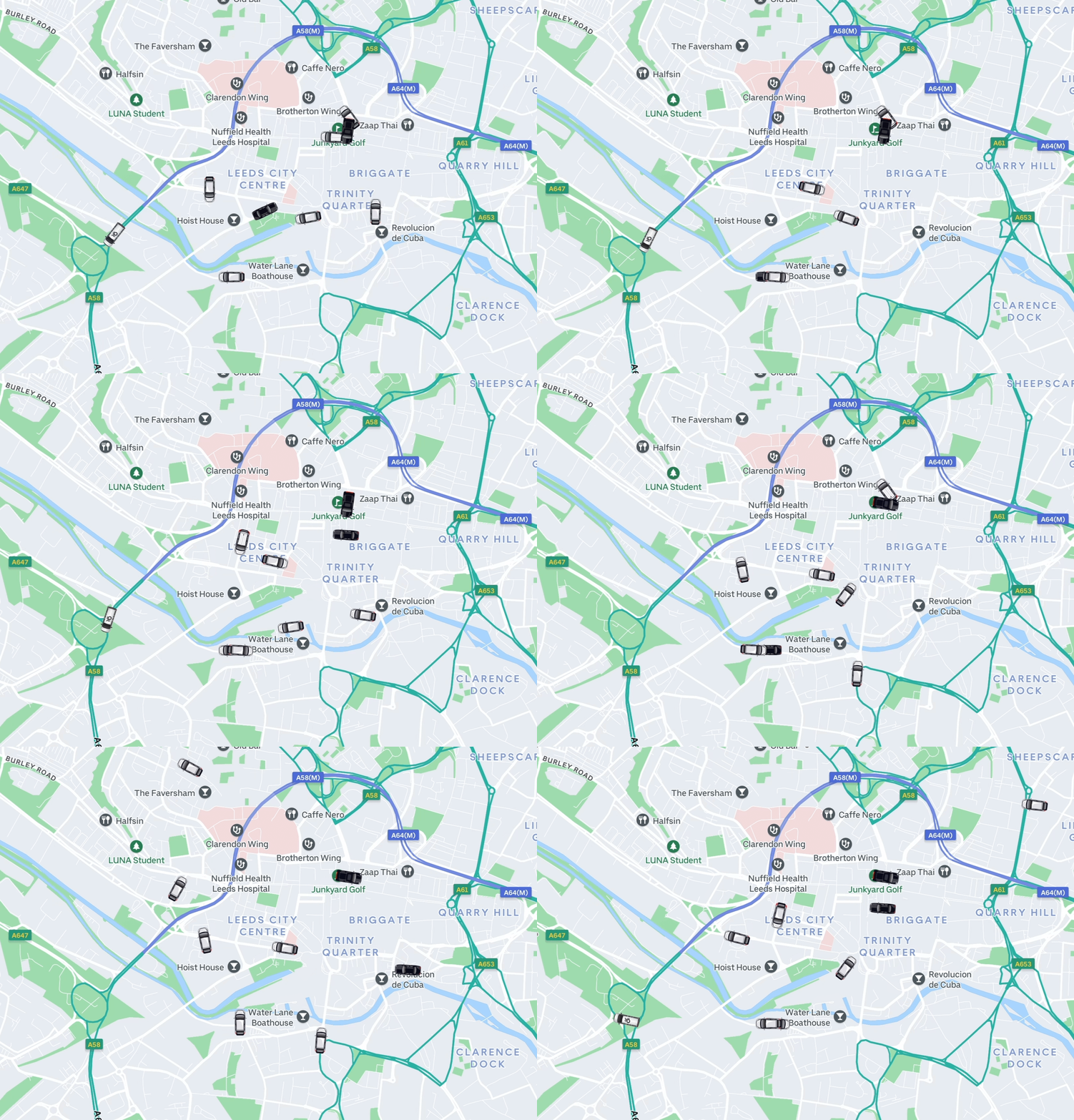
Figure 9: Real-time Uber ride-hailing map
This story is built from real data collected on Facebook and X.
How would you handle these situations? Do these ratings truly reflect who you are?
(Click the link to play our interactive story.)
Got your 5 star? Are you happy?
Or did you finally realize that the algorithm never cared about you? It doesn't see your struggles. All it demands is your performance: a polite "5-star user", a submissive "5-star driver". Fairness and bias are irrelevant. Warnings and punishments are just the system's "friendly suggestions" for improvement.
But who gets to define what "better" really means? Since when did a few stars determine a human being's value?
In the platform economy, the rating system is not only used to measure the quality of service but also as a tool for disciplining drivers and users. Low ratings can cause drivers to lose their jobs, so they are forced to suppress emotions and try to please passengers for high ratings. On the surface, users have the power to evaluate the service, but the driver's rating back to the passenger is also affect; users with low ratings may find it difficult to order a ride. Therefore, passengers also need to work hard to act as "good passengers". The platform allows drivers and users to check each other through data, and each feedback enriches the platform's database. However, both drivers and passengers find it hard to appeal for unfair ratings while chasing higher ratings. In the end, everyone is trapped in this evaluation system, trying to live as a "five-star person" defined by the algorithm.